

in-akustik manufactures high-end speaker cables in its Black Forest facility in Germany. The range spans four quality tiers, from Reference and Excellence to Premium and Star, all built around low-inductance, multi-core conductors. Flagship models are silver cables that use the patented AIR-Helix geometry with air insulation to minimise capacitance and preserve signal integrity. You get tighter bass, more precise imaging and natural timbre at every price point.


LS-SILBER
The in‑akustik Premium LS‑SILVER speaker cable combines high-quality materials with precise engineering to deliver dynamic, detailed, and transparent sound reproduction. The conductors are made of high-purity copper – the best electrical conductor after silver under normal conditions. Compared to copper-clad aluminum (CCA), pure copper provides not only superior conductivity but also greater mechanical durability. An additional silver plating on the conductor surface enhances high-frequency performance, providing clear, open, and nuanced detail reproduction. The strand structure is proven and precisely engineered: 30 × 0.25 mm - 1.5 mm² speaker cable 50 × 0.25 mm - 2.5 mm² speaker cable 84 × 0.30 mm - 4.0 mm² speaker cable The wires are twisted together (“stranded”), increasing mechanical flexibility, especially with smaller individual wire diameters. Another advantage of the Premium LS‑SILVER is the opposite strand twisting (S/Z twisting) of the positive and negative conductors. Conventional cables with strands twisted in the same direction can be difficult to route and may tangle. With opposite twisting, torsion forces cancel out, allowing the cable to be handled and installed smoothly and neatly. With conductor cross-sections up to 4 mm², the cable provides a solid foundation for powerful, dynamic, and detailed sound reproduction, suitable for both stereo and home theater applications. The Premium LS‑SILVER is the ideal speaker cable for audiophiles who value high-quality materials, precise construction, and uncolored signal transmission.


LS-CU
Under normal conditions, copper is the next-best electrical conductor after silver. Compared to cheap CCA (Copper Coated Aluminum) in particular, copper has a significantly better conductivity and is also mechanically more resilient. The wires of the Premium LS-CU speaker cable are made of particularly high-purity copper. A conductor cross-section of up to 4 mm² provides the basis for a powerful and dynamic sound. Stranded wire is a tried-and-tested conductor design. In the Premium LS-CU speaker cable, the strands consist of 30 x 0.25 mm - speaker cable 1.5 mm² 50 x 0.25 mm - speaker cable 2.5 mm² 84 x 0.30 mm - speaker cable 4.0 mm² wires "braided" together. The advantage of this design lies in the mechanical flexibility, which increases with smaller diameters of the individual wires. For cost reasons, many loudspeaker cables use the same stranded wire with the same stranding direction for both the positive and negative conductors. However, these cables are not easy to lay and tend to get tangled due to the torsional forces acting on the strands in the same direction. This can be remedied by using stranded wires with different stranding directions for the positive and negative conductors. The opposing torsional forces cancel each other out and the cable can be laid more easily and smoothly.


LS-CU
Under normal conditions, copper is the second-best electrical conductor after silver. Compared to inexpensive CCA (Copper Coated Aluminum), copper offers significantly higher conductivity and also provides superior mechanical strength. The conductors of the Premium LS-CU are made from particularly high-purity copper. A conductor cross-section of up to 4 mm² forms the basis for a powerful and dynamic sound performance. Stranded wire is one of the proven conductor constructions. In the Premium LS-CU, the strands consist of 84 x 0.30 mm - Speaker cable 4.0 mm² twisted individual wires. The advantage of this construction lies in its high mechanical flexibility, which further increases as the diameter of the individual wires decreases. For cost reasons, many speaker cables use identical strands with the same stranding direction for both the positive and negative conductors. However, due to the identical torsional forces of the strands, such cables are often more difficult to route and tend to twist or tangle. This issue can be avoided by using strands with opposite stranding directions for the positive and negative conductors. The opposing torsional forces cancel each other out, allowing the cable to be routed more easily and smoothly.


LS-CU Flat
The Premium LS-CU Flat speaker cable is the ideal solution for anyone seeking high-quality audio performance without visible cable clutter. With its extremely flat design of just 4 mm thick, it can be effortlessly routed under carpets, behind baseboards, or along wall edges – invisible and space-saving. The highly flexible conductors consist of the finest braided strands with a 0.7 mm² cross-section per core (total 2 x 2.5 mm²). Unlike rigid stranded constructions, this design offers exceptional flexibility that masters even tight curves and complex routing paths without compromising performance. Perfect for home cinema applications: Whether 5.1-, 7.1-, or even Atmos setups – the LS-CU Flat supplies all speakers with ample power and delivers precise, powerful sound. The high-quality pure copper construction ensures minimal signal loss and natural reproduction that holds up even in demanding scenes. This cable combines functionality with HiFi quality: discreet in use, convincing in sound – the smart choice for modern living spaces and ambitious home cinema builders.


LS-14-CU flame retardant
The LS-14-CU flame-retardant speaker cable has been specifically designed for permanent building installations where both fire safety requirements and reliable signal transmission are essential. Certification according to EN 50575 Class Eca complies with the Construction Products Regulation (CPR) and enables use in professional installation environments. The conductor consists of 50 individual copper strands with a diameter of 0.25 mm each, forming a total cross-section of 2 × 2.5 mm². This construction provides an excellent balance of electrical conductivity and mechanical stability for long-term installations. The talc-coated PVC jacket simplifies stripping and ensures convenient handling during installation. Clear conductor color coding (Red / Blue) allows quick polarity identification, making installation faster and more straightforward. With its robust construction, standards-compliant flame rating, and installation-friendly design, this cable is a reliable choice for speaker wiring in buildings, conference rooms, training facilities, and professional audio installations.


LS-CU flame retardant
The LS-CU flame-retardant speaker cable is designed for professional audio installations where, in addition to high signal quality, enhanced safety requirements must be met. The flame-retardant construction according to IEC 60332-1-2 Class Eca reduces the spread of flames along the cable, making it suitable for use in buildings and technical installations. The conductors consist of stranded copper wires with 0.25 mm diameter, providing an excellent balance of flexibility and mechanical stability. Depending on the application, the cable is available with a 2 × 1.5 mm² or 2 × 2.5 mm² cross-section, making it suitable for both compact audio installations and higher-power speaker systems. The extruded PVC jacket is easy to strip and facilitates quick handling during installation. Clear red/black conductor coding simplifies correct polarity assignment when connecting speakers. With its robust construction, standards-compliant flame rating, and excellent installation properties, the LS-CU is a reliable solution for public address systems, home theater setups, or professional audio cabling in buildings.


LS-CU
The classic speaker cable for all applications, with remarkable electrical properties. Suitable for the home hi-fi, car hi-fi, DJ and home cinema sectors. The compact design brings remarkable performance in a minimum of space, with an optimum price/performance ratio. Perfect for laying - it is extremely flexible and easy to install thanks to conductors with diametrically opposed twist (S/Z). Plus/minus coding for orientation purposes.


LS-CU
The classic speaker cable for all applications, with remarkable electrical properties. Suitable for the home hi-fi, car hi-fi, DJ and home cinema sectors. The compact design brings remarkable performance in a minimum of space, with an optimum price/performance ratio. Perfect for laying - it is extremely flexible and easy to install thanks to conductors with diametrically opposed twist (S/Z). Plus/minus coding for orientation purposes.


LS-CU
The classic speaker cable for all applications, with remarkable electrical properties. Suitable for the home hi-fi, car hi-fi, DJ and home cinema sectors. The compact design brings remarkable performance in a minimum of space, with an optimum price/performance ratio. Perfect for laying - it is extremely flexible and easy to install thanks to conductors with diametrically opposed twist (S/Z). Plus/minus coding for orientation purposes.


LS-CU | Reel
Under normal conditions, copper is the next-best electrical conductor after silver. Compared to cheap CCA (Copper Coated Aluminum) in particular, copper has a significantly better conductivity and is also mechanically more resilient. The wires of the Premium LS-CU speaker cable are made of particularly high-purity copper. A conductor cross-section of up to 4 mm² provides the basis for a powerful and dynamic sound. Stranded wire is a tried-and-tested conductor design. In the Premium LS-CU, the strands consist of 84 x 0.30 mm (4.0 mm²) wires "braided" together. The advantage of this design lies in the mechanical flexibility, which increases with smaller diameters of the individual wires. For cost reasons, many loudspeaker cables use the same stranded wire with the same stranding direction for both the positive and negative conductors. However, these cables are not easy to lay and tend to get tangled due to the torsional forces acting on the strands in the same direction. This can be remedied by using stranded wires with different stranding directions for the positive and negative conductors. The opposing torsional forces cancel each other out and the cable can be laid more easily and smoothly.

LS-CU | Reel
The classic speaker cable for all applications, with remarkable electrical properties. Suitable for the home hi-fi, car hi-fi, DJ and home cinema sectors. The compact design brings remarkable performance in a minimum of space, with an optimum price/performance ratio. Perfect for laying - it is extremely flexible and easy to install thanks to conductors with diametrically opposed twist (S/Z). Plus/minus coding for orientation purposes.

LS-CU | Reel
The classic speaker cable for all applications, with remarkable electrical properties. Suitable for the home hi-fi, car hi-fi, DJ and home cinema sectors. The compact design brings remarkable performance in a minimum of space, with an optimum price/performance ratio. Perfect for laying - it is extremely flexible and easy to install thanks to conductors with diametrically opposed twist (S/Z). Plus/minus coding for orientation purposes.


LS-CU
The classic speaker cable for all applications, with remarkable electrical properties. Suitable for the home hi-fi, car hi-fi, DJ and home cinema sectors. The compact design brings remarkable performance in a minimum of space, with an optimum price/performance ratio. Perfect for laying - it is extremely flexible and easy to install thanks to conductors with diametrically opposed twist (S/Z). Plus/minus coding for orientation purposes.


LS-CU
The classic speaker cable for all applications, with remarkable electrical properties. Suitable for the home hi-fi, car hi-fi, DJ and home cinema sectors. The compact design brings remarkable performance in a minimum of space, with an optimum price/performance ratio. Perfect for laying - it is extremely flexible and easy to install thanks to conductors with diametrically opposed twist (S/Z). Plus/minus coding for orientation purposes.


LS-1205 AIR | BiWire Jumper
To achieve the best possible sound, it is crucial that the amplifier has a firm grip on the speakers. In addition to activating the membranes to make them vibrate, it must also be able to dampen them effectively. One measure of this is the amplifier’s damping factor. The speakers’ actual damping factor is significantly influenced by the quality of the speaker cables and connecting bridges of the bi-wiring terminals. The original bridges often consist of simple stamped sheet metal parts of inferior quality. The new in-akustik AIR High End Bi-Wire Jumpers are based on the technologies, findings and materials of the renowned LS-1205 AIR, LS-2405 AIR and LS-4005 AIR speaker cables. If bi-wiring is not an option, these high-end bi-wire jumpers offer an excellent alternative to the often inferior metal bridges on the speaker terminals. They ensure an even and controlled signal distribution, which is perfectly harmonized with the respective speaker cable.


LS-2405 AIR | BiWire Jumper
To achieve the best possible sound, it is crucial that the amplifier has a firm grip on the speakers. In addition to activating the membranes to make them vibrate, it must also be able to dampen them effectively. One measure of this is the amplifier’s damping factor. The speakers’ actual damping factor is significantly influenced by the quality of the speaker cables and connecting bridges of the bi-wiring terminals. The original bridges often consist of simple stamped sheet metal parts of inferior quality. The new in-akustik AIR High End Bi-Wire Jumpers are based on the technologies, findings and materials of the renowned LS-1205 AIR, LS-2405 AIR and LS-4005 AIR speaker cables. If bi-wiring is not an option, these high-end bi-wire jumpers offer an excellent alternative to the often inferior metal bridges on the speaker terminals. They ensure an even and controlled signal distribution, which is perfectly harmonized with the respective speaker cable. BFA & Spade 360° (LS-4005 AIR & LS-2405 AIR): Movement across three axes make the 360-degree BFA and spade connectors really easy to connect and disconnect. Difficult set-up operations that put a strain on both cables and devices are a thing of the past. The connectors can easily be attached to terminals from a wide range of manufacturers. No awkward bending is necessary, avoiding damage to surfaces and potential contact resistance. Set-up is fast and problem-free. The attractively designed connectors are the perfect complement to the outstanding sound. The new connectors are used with the LS-4005 and the LS-2405. Both connector versions as well as the Basic version for the LS-1205 are pressure-grouted with a force of 1.5 tonnes.


LS-4005 AIR | BiWire Jumper
To achieve the best possible sound, it is crucial that the amplifier has a firm grip on the speakers. In addition to activating the membranes to make them vibrate, it must also be able to dampen them effectively. One measure of this is the amplifier’s damping factor. The speakers’ actual damping factor is significantly influenced by the quality of the speaker cables and connecting bridges of the bi-wiring terminals. The original bridges often consist of simple stamped sheet metal parts of inferior quality. The new in-akustik AIR High End Bi-Wire Jumpers are based on the technologies, findings and materials of the renowned LS-1205 AIR, LS-2405 AIR and LS-4005 AIR speaker cables. If bi-wiring is not an option, these high-end bi-wire jumpers offer an excellent alternative to the often inferior metal bridges on the speaker terminals. They ensure an even and controlled signal distribution, which is perfectly harmonized with the respective speaker cable. BFA & Spade 360° (LS-4005 AIR & LS-2405 AIR): Movement across three axes make the 360-degree BFA and spade connectors really easy to connect and disconnect. Difficult set-up operations that put a strain on both cables and devices are a thing of the past. The connectors can easily be attached to terminals from a wide range of manufacturers. No awkward bending is necessary, avoiding damage to surfaces and potential contact resistance. Set-up is fast and problem-free. The attractively designed connectors are the perfect complement to the outstanding sound. The new connectors are used with the LS-4005 and the LS-2405. Both connector versions as well as the Basic version for the LS-1205 are pressure-grouted with a force of 1.5 tonnes.


LS-1205 AIR Pure Silver | BiWire Jumper
To achieve the best possible sound, it is crucial that the amplifier has a firm grip on the speakers. In addition to activating the membranes to make them vibrate, it must also be able to dampen them effectively. One measure of this is the amplifier’s damping factor. The speakers’ actual damping factor is significantly influenced by the quality of the speaker cables and connecting bridges of the bi-wiring terminals. The original bridges often consist of simple stamped sheet metal parts of inferior quality. The new in-akustik AIR High End Bi-Wire Jumpers are based on the technologies, findings and materials of the renowned LS-1205 AIR, LS-2405 AIR and LS-4005 AIR speaker cables. If bi-wiring is not an option, these high-end bi-wire jumpers offer an excellent alternative to the often inferior metal bridges on the speaker terminals. They ensure an even and controlled signal distribution, which is perfectly harmonized with the respective speaker cable. To get closer to the pinnacle of audiophile perfection, we also carefully examined the conductor material. Copper in the right purity is itself already an excellent conductor, but a superconductor with no ohmic resistance to the current would be simply perfect. The material’s superconducting properties, however, require extremely low temperatures of at least -70 degrees. Under realistic conditions, silver is currently the most conductive material. With a conductivity of 61.35 S/m (siemens per meter), it outperforms copper by around six percent. Many manufacturers only use silver-plated conductors, which over time can seem, “bright”, “metallic” and even, “annoying”. We, on the other hand, use pure silver, which has a far more neutral sound. Due to the higher drift speed of the electrons, our pure silver cable delivers a more penetrating and sumptuous sound performance across all frequency ranges. On the other hand of course, silver is about one hundred times more expensive than copper.


LS-2405 AIR Pure Silver | BiWire Jumper
To achieve the best possible sound, it is crucial that the amplifier has a firm grip on the speakers. In addition to activating the membranes to make them vibrate, it must also be able to dampen them effectively. One measure of this is the amplifier’s damping factor. The speakers’ actual damping factor is significantly influenced by the quality of the speaker cables and connecting bridges of the bi-wiring terminals. The original bridges often consist of simple stamped sheet metal parts of inferior quality. The new in-akustik AIR High End Bi-Wire Jumpers are based on the technologies, findings and materials of the renowned LS-1205 AIR, LS-2405 AIR and LS-4005 AIR speaker cables. If bi-wiring is not an option, these high-end bi-wire jumpers offer an excellent alternative to the often inferior metal bridges on the speaker terminals. They ensure an even and controlled signal distribution, which is perfectly harmonized with the respective speaker cable. To get closer to the pinnacle of audiophile perfection, we also carefully examined the conductor material. Copper in the right purity is itself already an excellent conductor, but a superconductor with no ohmic resistance to the current would be simply perfect. The material’s superconducting properties, however, require extremely low temperatures of at least -70 degrees. Under realistic conditions, silver is currently the most conductive material. With a conductivity of 61.35 S/m (siemens per meter), it outperforms copper by around six percent. Many manufacturers only use silver-plated conductors, which over time can seem, “bright”, “metallic” and even, “annoying”. We, on the other hand, use pure silver, which has a far more neutral sound. Due to the higher drift speed of the electrons, our pure silver cable delivers a more penetrating and sumptuous sound performance across all frequency ranges. On the other hand of course, silver is about one hundred times more expensive than copper. BFA & Spade 360° (LS-4005 AIR & LS-2405 AIR): Movement across three axes make the 360-degree BFA and spade connectors really easy to connect and disconnect. Difficult set-up operations that put a strain on both cables and devices are a thing of the past. The connectors can easily be attached to terminals from a wide range of manufacturers. No awkward bending is necessary, avoiding damage to surfaces and potential contact resistance. Set-up is fast and problem-free. The attractively designed connectors are the perfect complement to the outstanding sound. The new connectors are used with the LS-4005 and the LS-2405. Both connector versions as well as the Basic version for the LS-1205 are pressure-grouted with a force of 1.5 tonnes.


LS-4005 AIR Pure Silver | BiWire Jumper
To achieve the best possible sound, it is crucial that the amplifier has a firm grip on the speakers. In addition to activating the membranes to make them vibrate, it must also be able to dampen them effectively. One measure of this is the amplifier’s damping factor. The speakers’ actual damping factor is significantly influenced by the quality of the speaker cables and connecting bridges of the bi-wiring terminals. The original bridges often consist of simple stamped sheet metal parts of inferior quality. The new in-akustik AIR High End Bi-Wire Jumpers are based on the technologies, findings and materials of the renowned LS-1205 AIR, LS-2405 AIR and LS-4005 AIR speaker cables. If bi-wiring is not an option, these high-end bi-wire jumpers offer an excellent alternative to the often inferior metal bridges on the speaker terminals. They ensure an even and controlled signal distribution, which is perfectly harmonized with the respective speaker cable. To get closer to the pinnacle of audiophile perfection, we also carefully examined the conductor material. Copper in the right purity is itself already an excellent conductor, but a superconductor with no ohmic resistance to the current would be simply perfect. The material’s superconducting properties, however, require extremely low temperatures of at least -70 degrees. Under realistic conditions, silver is currently the most conductive material. With a conductivity of 61.35 S/m (siemens per meter), it outperforms copper by around six percent. Many manufacturers only use silver-plated conductors, which over time can seem, “bright”, “metallic” and even, “annoying”. We, on the other hand, use pure silver, which has a far more neutral sound. Due to the higher drift speed of the electrons, our pure silver cable delivers a more penetrating and sumptuous sound performance across all frequency ranges. On the other hand of course, silver is about one hundred times more expensive than copper. BFA & Spade 360° (LS-4005 AIR & LS-2405 AIR): Movement across three axes make the 360-degree BFA and spade connectors really easy to connect and disconnect. Difficult set-up operations that put a strain on both cables and devices are a thing of the past. The connectors can easily be attached to terminals from a wide range of manufacturers. No awkward bending is necessary, avoiding damage to surfaces and potential contact resistance. Set-up is fast and problem-free. The attractively designed connectors are the perfect complement to the outstanding sound. The new connectors are used with the LS-4005 and the LS-2405. Both connector versions as well as the Basic version for the LS-1205 are pressure-grouted with a force of 1.5 tonnes.


S25 Jumper | BiWire Jumper
To achieve the best possible sound, it is crucial that the amplifier has the speakers firmly under control. It must drive the Membranes with equal precision and bring them to a controlled stop. One measure of this is the amplifier’s damping factor. It describes how effectively the amplifier can control the speaker. However, the actual damping factor at the speaker is only as good as the weakest link in the signal path. For many speakers, this is the standard bi-wiring bridges—often simple stamped metal plates with poor electrical properties. The in-akustik S25 BiWire Jumpers replace this weak point with a high-quality connection based on the technologies and materials of the S25 cable series. They ensure low-loss and uniform signal distribution between the bi-wiring terminals, thereby supporting more precise control of the speaker cones. The sophisticated multicore structure reduces the skin effect and contributes to a detailed, controlled reproduction. High-purity OFC copper and gold-plated cable lugs minimize contact resistance and ensure a permanently stable connection. Even without true bi-wiring, the S25 BiWire Jumpers offer a high-quality alternative to the standard metal Jumpers found on many speakers.


LS-1002 | BiWire Jumper
The Referenz high-end bi-wire bridge, based on the LS-1002 and the Referenz spade lug KS-60. Concentric copper is used in the conductor structure, where each wire has a precisely defined position within the conductor. This structure ensures even signal transmission for crystal-clear audio reproduction. Under normal conditions, the copper used as conductor material is considered to be one of the next-best electrical conductors after silver. Compared to cheap CCA (Copper Coated Aluminum), copper has a significantly better conductivity and is also mechanically more resilient.


Cable Base - 4005
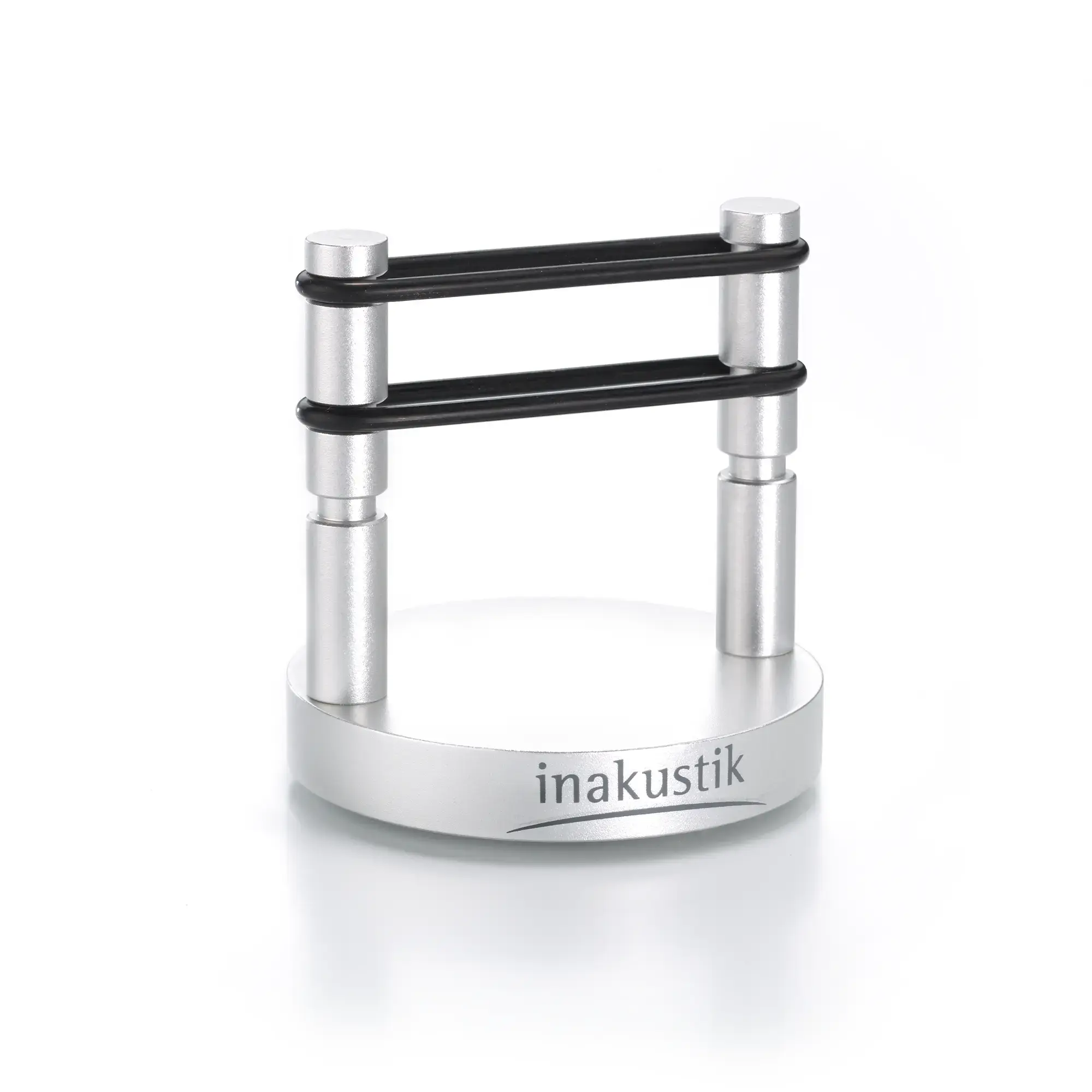
High-end and hi-fi systems are a combination of high-precision and intricately made devices. Perfectly attuned to each other, they allow music to be played back in outstanding quality. To ensure that all components can function flawlessly, they need to be kept free of interference to the greatest extent possible, just like high precision measuring equipment does. The same also applies for the connection cables. Interference is caused in a number of different ways. Along with typical electromagnetic interference, which can, for example, be minimised by using good shielding, mechanical vibrations and shocks also have an impact on the playback quality. Added to this are the effects of capacitive coupling between conductors and floors, which affect loudspeakers cables in particular. The conductors form unwanted capacitance, not just in interplay with each other, but also with other surfaces in the immediate surroundings. A good way to counteract this is by increasing the distance to the surfaces. As a rule, a few centimetres suffice. Vibrations are caused in different ways and they can be transmitted by structure-borne and air-borne noise. Structure-borne noise refers to vibrations that are exhibited by a body, such as the housing of a device. An example of this is the loudspeaker box. The membranes of the speakers are stimulated, making them vibrate. However, as the membranes feature a mechanical connection with the loudspeaker housing, they also transfer vibrations to the housing. The vibrations will be stronger or weaker according to the housing weight and the insulation. The vibrations are also transferred to the surface on which the loudspeakers are placed, this being the floor. Two things now occur. On the one hand, the floor emits some of the structure-borne energy as airborne sound (resulting in the typical droning noise), while on the other hand, the structure-borne noise is transferred, for example, to the cable placed on the floor. More about the effects of this later on. Airborne sound refers to vibrations that are transferred through the air and that are audible for humans (with the exception of infrasound and ultrasound). The primary purpose of a hi-fi system is to produce sound. However, airborne noise not only stimulates the eardrum, but also acts on all other surfaces it reaches. This causes the walls, floors and other surfaces, and ultimately the hi-fi components and cables, to vibrate as well. The combination of airborne and structure-borne noise not only causes glasses in a display case to vibrate mechanically, but all components, including the cable used for a hi-fi signal chain, as well. Experiments have shown that the sound from the components and from the cables is impaired by the vibrations. One reason for this is, for example, the capacity values of components in relation to each other, which constantly change due to the vibrations. In order to minimise these so-called microphonic effects, the components must be isolated from the surface on which they are placed. This can be done by using the Reference High Tech Gel Absorber, for example, for appliances and loudspeakers. Their core contains a special gel, which physically converts the vibrations into heat. The Reference Cable Bases have been developed specifically for cables. Their base also contains a special gel, along with natural rubber strips, in which the cables can float freely. Along with absorbing the vibrations, the Reference Cable Bases also keep the cables at a distance to the floor. This reduces unwanted capacitances and reduces the effects on the electronics.

Cable Base - 2405
High-end and hi-fi systems are a combination of high-precision and filigree devices. Perfectly coordinated, they are capable of reproducing music in outstanding quality. However, in order for the components to work perfectly, they must be kept as free from interference as possible, just like high-precision measuring instruments. The same applies to the connection cables. However, interference can occur in many different ways. In addition to the typical electromagnetic interference, which can be minimized by good shielding, for example, mechanical vibrations and shocks also affect playback quality. The Referenz cable bases have been specially developed for cables. They also have a special gel incorporated in their base and additional natural rubber bands to accommodate the freely suspended cables. As well as absorbing vibrations, the Referenz cable bases also keep the cable at a distance from the floor, reducing unwanted capacitance and the impact on the electronics.
Buying the right speaker cable
Choosing the right speaker cable can significantly impact the sound quality of your HiFi system. In addition to the conductor cross-section, the cable's inductance, or the construction of the cable, and other factors also play a role.
Conductor cross-section
The conductor cross-section should be large enough so that the current flowing through the cable can be transported with as little loss as possible. The higher the power of the amplifier and the longer the cable run, the larger the conductor cross-section should be.
Rule of thumb:
Standard: between 2.5 mm² to 4mm² for normal HiFi systems with cable lengths up to 5 meters.
Better Sound: 4 mm² or more for longer cables, powerful amplifiers, or an even better audiophile sound experience.
High-End: In audiophile music reproduction, special requirements are placed on signal transmission. Besides the cross-section, especially the cable architecture or the construction of the cable plays a crucial role.
What matters:
Higher Power: High-end speakers often need to be supplied with significantly more power than ordinary HiFi speakers.
Longer Cable Routes: In event technology, studios, or home cinema, cable routes of 10 meters or more are not uncommon.
Loss-Free Signal Transmission: To minimize sound losses and distortions, among other things, a thicker cross-section is necessary.
High-Quality Music Reproduction: Cross-sections up to 10 mm² for high power, long cable routes, and loss-free signal transmission.
Expanded Sound Spectrum: Thicker cables can transmit a wider frequency spectrum, revealing more details and nuances in the sound.
Dynamics and Precision: Improved dynamics and precision in the bass range as well as a clearer and finer resolution in the high-frequency range.
Future-Proof: A higher cross-section provides reserves for future upgrades of your HiFi system.
Cable inductance
The cable's inductance acts like a frequency-dependent resistance, which can dampen the high-frequency range. Therefore, a cable with low inductance is advantageous. This is achieved by a special construction of the cable, for example, through a multicore structure. The clever arrangement of conductors in the multi-layered multicore structures creates overlapping areas of magnetic fields that significantly reduce inductance. The entire frequency spectrum, including high tone frequencies and dynamic pulse sequences, are transmitted unhindered and without time delay. Music sounds more detailed. The sound is more dynamic. All details are worked out precisely and harmonically.
The construction of our audiophile AIR speaker cables is based on the multicore principle and thus reduces inductance.
Cable capacitance
Particularly problematic for as loss-free signal transmission as possible is the capacitance, since every cable has an electrical capacitance. This behaves similarly to a battery that must be continuously charged and discharged by the components in the cable. These processes burden the audio signal, cause phase shifts, and influence the sound quality of the system. The capacitance is influenced by various factors, such as the material with which the conductors are insulated (usually PVC, known as dielectric) and the distance between the conductors. Depending on which insulating material is used and how far the conductors are from each other, the capacitance of the cable varies.
The AIR-Helix construction of our high-end speaker cables allows for the use of air as a dielectric (besides vacuum, the best possible dielectric) to keep the conductors at a consistent distance from each other throughout the entire length of the cable.
Experiment: Here you can learn how insulation and conductor distance affect capacitance.
In summary
- The construction of the cable: The multicore construction reduces inductance.
- The insulation of the cable: Air as insulation (dielectric) minimizes the capacitance
- The quality of the connectors: The connectors should be coated with very hard materials (e.g., Rhodium) to prevent corrosion.
- The material of the conductor: Copper is the most commonly used conductor material and achieves excellent sound properties depending on the degree of purity. Pure silver conductor is the best but also by far the most expensive conductor material. Not to be confused with silver-plated conductors, which tend to emphasize the high-frequency range!
Differences between single-wire, single bi-wire, bi-wire, and bi-amping
Not all speaker cables are the same—their design and intended use differ significantly. The terms single-wire, single bi-wire, bi-wire, and bi-amping describe different types of connections between the amplifier and the speaker and influence how the individual frequency ranges are controlled.
Are losses on speaker cables measurable?
To get to the bottom of this question, we take you to our lab in an exciting webinar. In this webinar, we analyze the results of a measurement setup and consider what relationship might exist between sound and cable. In addition to the actual measurements, we also show you a very astonishing experiment.
Webinar contents
What to expect in this webinar
- Measurements on speaker cables in the lab
- What is the damping factor and why is it important
- How is the damping factor measured
- Evaluation of the results
- Another impressive "sound experiment"
Here you can register for this and other HiFi webinars at the in-akustik academy
Buying high-quality speaker cables
Many HiFi enthusiasts wonder whether it's worth investing in high-quality speaker cables. The answer is not simple, as it depends on various factors. In addition to optimizing room acoustics, the correct placement of speakers, and the finely tuned selection of electronics, the appropriate cabling of your HiFi chain also holds significant potential.
Basically:
The higher the quality of the cable, the lower the losses. This means that more of the amplifier's signal reaches the speaker, making the music sound more detailed and powerful.
First-rate cables can also improve the spatiality of the sound image. The individual instruments and voices are more locatable, and the overall sound impression appears more natural.
Speaker cables from in-akustik in four quality levels
- Reference: Our most innovative cables made from the highest quality materials, based on the AIR Helix Point-to-Point technology for the unique audiophile listening pleasure - Made in Germany
- Excellence: HiFi speaker cables with perfected insulation and flexibility as the basis for a solid and powerful sound - Made in Germany
- Premium: Speaker cables for classic stereo or home cinema systems. Extremely easy to lay.
- Star: Universal speaker cables for a wide range of applications such as Home-Hifi, Car-Hifi, DJ, or home cinema areas
High-end speaker cables from in-akustik
High-Quality Materials: Ultra-pure, oxygen-free copper for our top-class speaker cables - with silver cables, an even better sound experience is achieved.
Assembly: High-quality connectors and clean processing.
Made in Germany: All cables of the "Reference" quality level do not leave our manufacturing plant without a final quality control.
Are speaker cables available in fixed lengths or by the meter?
At in-akustik, you can purchase speaker cables both by the meter for custom assembly and in pre-assembled versions with high-quality connectors, depending on the quality level and area of application.
In the entry-level and mid-range segments – i.e., our Star and Premium series – the cables are usually available by the meter. Depending on the model, these classic twin cables feature technical specialities such as MSR technology, S/Z stranding, or special conductor geometries. You can find suitable accessories for custom assembly, such as banana plugs or cable lugs, in the accessories section. This allows you to tailor your cable precisely to your room, system, and individual requirements.
In the higher quality levels Excellence and Reference we generally only offer speaker cables that are pre-assembled. Here, the complex processing – for example, in our AIR Helix cables – requires the highest precision and special tools. For example, the connectors are permanently pressed onto the conductor with up to 1.5 tons of pressure without any loss of quality. Each of these connections is manufactured and tested by experienced cable workers at our factory in Germany.
Whether sold by the meter or as ready-made high-end cables, both variants represent the high quality made in Germany for which in-akustik has been known for decades.
High-Quality Accessories for Speaker Cables
In addition to the speaker cables themselves, there are several useful accessories that can facilitate installation and use and can improve sound quality.
Here are some examples:
Banana plugs
Banana plugs allow for a quick and easy connection between the speaker cable and speaker.
They are available in various designs, e.g., as straight or angled plugs.
For high-end systems, we recommend rhodium-coated plugs to prevent corrosion and contact resistance.
Spade connectors
Spade connectors are also available in various designs. Our high-end versions are rhodium-coated and feature a slotted contact fork. The contact spring created by the slot deforms concavely when tightened, thus preventing the spade connectors from slipping out.
Cable bases
The cable bases consistently keep the cable at a distance from the ground. This reduces unwanted capacitances and relieves the electronics.
FAQ Speaker Cables
Current highlights:


The LS-404 Micro AIR is a further installment in the success story of the Micro AIR technology: As with the already legendary AIR Helix cables, air is also a central component of the insulation concept in the Referenz Micro AIR technology. Due to the low speaker impedances, however, low line resistances and a low inductance are also very important for speaker cables. For this reason, the Referenz LS-404 Micro AIR uses a total of 8 concentric copper conductors in addition to the air dielectric. Thanks to this multicore architecture, the magnetic fields of the positive and negative conductors overlap and neutralize each other. This significantly reduces the inductance of the cable, which guarantees unaltered transmission of the audio signal over a broad frequency spectrum. Due to our approach, the LS-404 has an extremely balanced sound character with precise timing, on top of a solidly controlled foundation. This cable is primarily designed for full-size floorstanding loudspeakers. The impression sound makes on the listener is always subjective, of course, and depends in no small part on the overall constellation of a hi-fi system. In the end, the decisive factor is your own personal listening impression. Click here and discover the exciting details


The LS-2405 AIR high-end speaker cable offers audiophile enthusiasts a unique sound experience. In the new Referenz LS-2405 AIR loudspeaker cable, we have taken the outstanding properties of its predecessor, the LS-2404 AIR, and developed them even further. The point-to-point Air Helix design now enables the AIR Helix architecture to be used from plug to plug and not just between the sleeves. The 360° BFA bananas and spade lugs are a further innovation, developed in-house for easy and convenient connection to the terminals. These and other technical refinements turn the already exceptional AIR cables into true masterpieces. Below you can learn more about the outstanding technical features of this cable, the innovations in the 5th generation and the physical principles used in the AIR technology Click here and discover the exciting details


The S25 Speaker Cable 425 is the most powerful model in the series, designed for audiophile setups with high power reserves and long cable runs. The large conductor cross-section and low-inductance multicore design ensure exceptionally low-loss transmission – even under high load or long cable lengths. The sound benefits from a particularly controlled, deep-reaching bass with precise punch, clearly defined mids, and an open, detailed high-frequency reproduction. The spatial presentation is stable and wide. Thanks to high-quality materials such as fine-stranded OFC copper, solid crimp contacts, and gold-plated connectors, the signal remains unaltered along the entire length. Its discreet, functionally elegant design and surprisingly high flexibility despite the large cross-section allow for neat, unobtrusive installation – even in complex rack setups or close to walls. Click here to discover exciting details

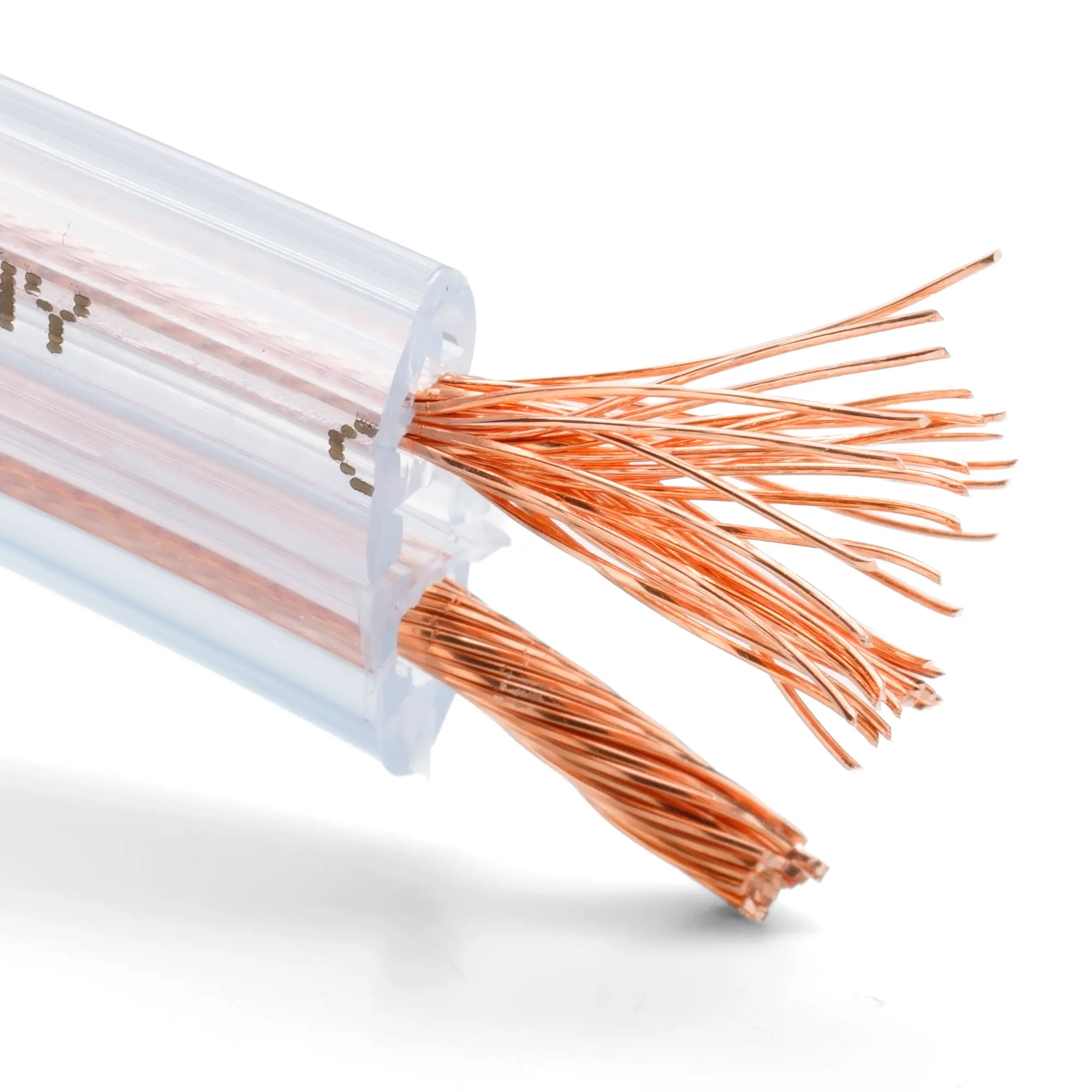
The LS-Atmos AIR speaker cable uses Atmos AIR technology to create optimal conditions for precise signal transmission. The design aims to utilize air - an ideal dielectric—as extensively as possible between the signal conductors. At the center of the electric field between the conductors, a defined air chamber is integrated into the cable structure. This reduces capacitance and dielectric losses and helps preserve the integrity of the audio signal. Another key feature is the Concentric Copper conductor design. Each individual copper strand is positioned in a precisely defined location within the conductor. Unlike conventional stranded constructions, where the relative position of the strands continuously changes, this geometry remains stable. The result is consistent electrical properties and controlled signal transmission. The combination of air insulation and a precisely defined conductor geometry supports transparent, detailed sound reproduction with excellent dynamics and natural tonal balance. The LS-Atmos AIR speaker cable is designed for demanding hi-fi enthusiasts who value high-quality materials, thoughtful engineering, and accurate signal transmission.
